Most mission-driven organizations are surrounded by more opportunities than they realize, and those opportunities are hiding in plain sight.
The opportunity is bigger than a donor list or a simple fundraising ask. It rests in the relationships already surrounding your work.
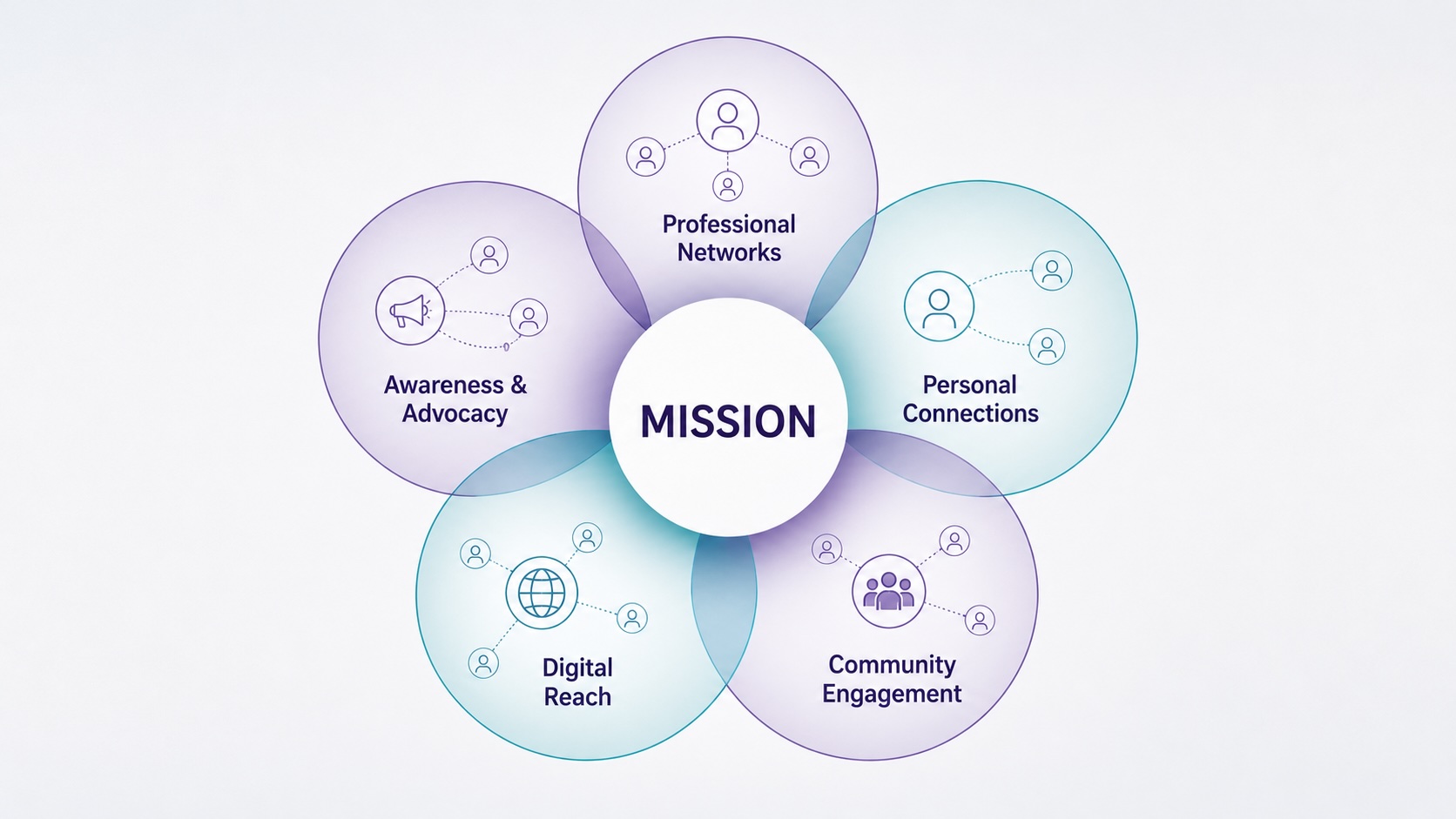
Every person connected to an organization has a sphere of influence. That sphere includes professional relationships, personal relationships, digital connections, civic networks, community ties, trusted peers, former colleagues, neighbors, friends, and people who simply care about the same things.
For mission-driven organizations, those relationships matter. These relationships can expand awareness, open doors, build trust, connect families to services, introduce new partners, help a story reach the right audience, identify volunteers, strengthen advocacy, and bring the mission into rooms where it otherwise may not be discussed.
That is not fundraising. That is mission activation.
Influence Is Not the Same as Authority
The biggest mistake organizations make is limiting influence to people with formal power. The CEO has influence. The board chair has influence. Major donors and institutional partners have influence.
But so does the program director who knows every family by name.
So does the volunteer who talks about the organization at church, school, or a neighborhood event.
So does the staff member whose college friend now works at a local company looking for community partners.
So does the parent whose child’s life was changed by the organization’s services.
So does the young professional who shares a post, invites friends to an event, or introduces someone to the mission for the first time.
Influence is not a title. It is trust. Influence is credibility, access, and proximity—the ability to help the right people understand why the work matters and how they can be part of it. When organizations understand this, influence stops being something reserved for a few people at the top and becomes an asset that exists across the entire ecosystem.
Influence Is Broader Than Fundraising
Here is where the conversation often goes wrong: When people hear “spheres of influence,” they often assume the next step is asking everyone to make a donor list.
That misses the point.
A strong Spheres of Influence strategy doesn’t turn staff into fundraisers, pressure board members to solicit donors, or make people feel like every relationship is being mined for money. For mission-driven organizations, influence is about building trust, something broader and more meaningful than a financial ask.
A person’s sphere may help identify referral partners. Another may help reach families who need services. Another may help build credibility with civic leaders. Another may surface a media opportunity, introduce a corporate volunteer group, connect the organization to a university program, or help a story reach an audience that needs to hear it.
Sometimes influence leads to funding. Often, it leads to something else that is just as important.
Awareness. Access. Partnership. Trust. Momentum.
The healthiest organizations understand the difference.
Every Person Carries a Piece of the Mission
Mission-driven work moves through people, not just through strategy documents. It moves when someone can explain the mission clearly, feels proud enough to share the work, and understands their role as an ambassador, not just in governance or internal operations.
That does not mean every person needs the same script or the same assignment. It means every person should understand the mission well enough to recognize when their relationships, experience, or community connections could help move it forward.
- A staff member may know a pediatrician who could become a referral partner.
- A board member may know a business leader looking for a meaningful employee engagement opportunity.
- A volunteer may know a family who needs services but does not know where to start.
- A donor may know another donor, but they may also know a journalist, civic leader, policymaker, school administrator, foundation officer, or community connector.
When those connections remain invisible, the organization misses opportunities already within reach.
Mapping Influence Creates Clarity
The goal of mapping spheres of influence is not to create a massive contact list, but to help the organization see its relationship ecosystem with clarity.
- Who is already close to the mission?
- Who actively supports the work?
- Who could help amplify, refer, advocate, partner, or connect?
- Where are relationships strong?
- Where are they underdeveloped?
- Which audiences are missing entirely?
- Which people inside the organization are naturally connected to those audiences?
This kind of mapping helps organizations move from vague networking to intentional engagement. It also helps people participate in ways that fit their role, comfort level, and real relationships. Not everyone should be making asks. Not everyone should be leading introductions. Not everyone should be public-facing.
But almost everyone can help identify a connection, share a story, open a door, or strengthen the organization’s understanding of the community around it.
Influence Compounds When It Is Shared
The power of spheres of influence is not in one person’s network. It is in the combined reach of many people who understand the mission and care enough to help advance it.
- A board member’s influence may connect the organization to civic leaders.
- A staff member’s influence may deepen trust with families.
- A volunteer’s influence may expand community awareness.
- A funder’s influence may open doors to other aligned partners.
- A parent advocate’s influence may bring the mission to life in a way no brochure ever could.
- Individually, each sphere matters. But together, they create momentum.
This momentum is critical for organizations doing work that is complex, deeply human, or highly local. People trust people. They pay attention when someone they know says, “This organization matters.” They listen differently when the mission comes through a real relationship, not just a campaign, brochure, or post.
The Mission Is Already Moving Through Your People
Every organization has formal communications channels. Websites. Emails. Social media. Events. Donor updates. Presentations. Annual reports.
Those channels matter. But mission-driven organizations also have informal channels moving every day through the people closest to the work.
- A conversation after a board meeting.
- A parent telling another parent where they found help.
- A staff member explaining the mission at a community event.
- A volunteer sharing why they keep showing up.
- A donor introducing the organization to a friend who cares about the same issue.
Those moments may feel small, but they are often where trust begins. The strategic question is whether the organization is equipping people to recognize and use those moments well.
That requires clarity. People need to know how to talk about the mission. They need to understand who the organization is trying to reach. They need simple ways to identify opportunities without feeling like they are being asked to sell. They need permission to be ambassadors in a way that feels authentic.
When that happens, spheres of influence become more than a workshop exercise. They become part of the organization’s culture.
A Better Way to Think About Growth
For mission-driven organizations, growth is not only about raising more money or reaching bigger audiences.
- It is about building the right relationships around the mission.
- It is about helping more people understand the work, trust the work, and find their place in the work.
- It is about recognizing that the people already connected to your organization may be holding doors you have not yet asked them to open.
That does not mean every relationship should be activated at once. It does not mean every connection should be pursued. It does not mean every person should be asked to do the same thing.
It means your organization should be thoughtful enough to know where influence exists, strategic enough to understand how it can help, and respectful enough to use it in ways that protect trust. Because influence, at its best, is not transactional. It is relational.
And for mission-driven organizations, relationships are often the difference between doing good work and helping more people know, trust, support, and benefit from that work.
Ready to Map Your Organization’s Spheres of Influence?
FLEX Partners helps mission-driven organizations identify, map, and activate the relationships that can move their work forward.
Our Spheres of Influence workshop is designed to help boards, staff, volunteers, and key stakeholders understand the influence already surrounding the organization and how to use it with clarity, purpose, and trust.
If your organization is ready to expand awareness, strengthen partnerships, activate ambassadors, and uncover opportunities hiding in plain sight, we would love to help.
Reach out to FLEX Partners to explore a Spheres of Influence workshop for your board, staff, or leadership team.

Ready to FLEX?
When you're ready for strategic support that adapts to your unique needs, FLEX Partners is here to help. Connect with us to explore how we can empower your success.