

The best teams don't wait until the end of the season to figure out what's working, what's not, and what needs to change. Why do so many organizations?
As the end of the year approaches, many organizations are preparing for annual performance reviews. Managers are gathering notes, employees are completing self-assessments, and HR teams are coordinating timelines and evaluation forms.
There's nothing inherently wrong with that process. Taking time to reflect on performance, recognize accomplishments, and set goals for the coming year is valuable.
But there's a big difference between reviewing performance and actually managing it.
Think about how professional sports teams operate. Coaches and players don't wait until the season ends to evaluate performance. They study game film throughout the season, looking at individual contributions, team dynamics, missed opportunities, and areas for improvement. They identify what worked, what didn't, and what adjustments might make the difference next time.
And the process isn't reserved for players who are struggling. The best athletes in the world also have coaches reviewing their performance and helping them improve.
There's a lot we can learn from that approach.
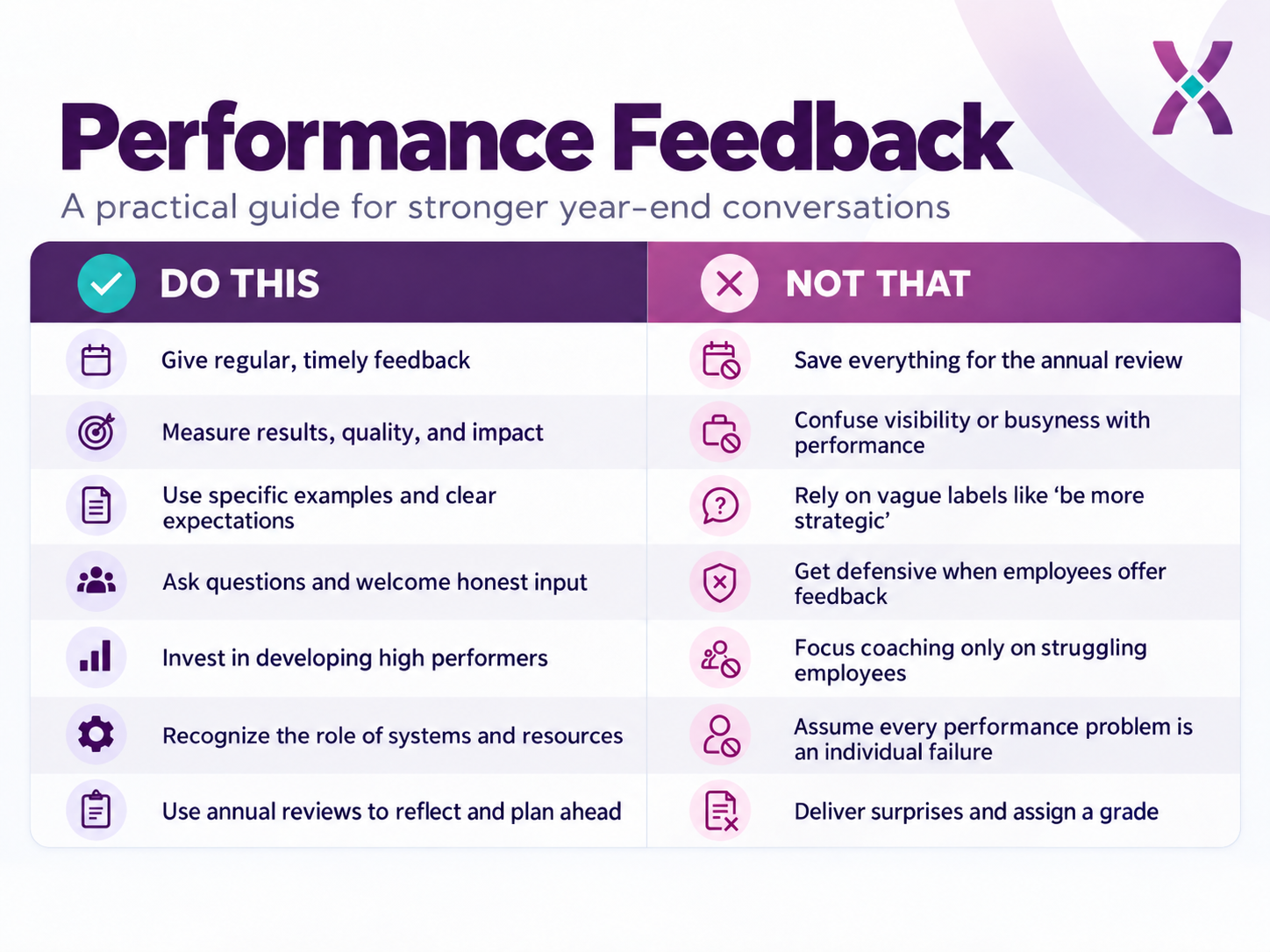
Annual reviews shouldn't contain surprises
Imagine a football coach watching a player repeatedly make the same mistake, saying nothing for months, and then bringing it up during a postseason evaluation.
That wouldn't be particularly helpful to the player or the team. Yet something similar happens in workplaces all the time.
An employee learns during a December review that their communication has been an issue since April. Another discovers that their manager has been impressed with their leadership for months but never mentioned it. Someone else receives a mediocre rating despite believing they've been meeting every expectation.
None of these conversations should be happening for the first time at year-end.
Regular feedback gives people an opportunity to understand expectations, recognize where they're succeeding, and make adjustments while those adjustments can still make a difference.
It also makes annual reviews considerably more productive. Instead of introducing new information, the conversation can focus on progress, patterns, accomplishments, and what's next.
Measure performance, not visibility
This is especially important as organizations continue navigating remote, hybrid, and in-person work. It's easy to confuse activity with productivity or visibility with contribution.
The employee who responds to every message within minutes isn't necessarily delivering the strongest results. The person who speaks most frequently during meetings isn't automatically contributing the best ideas. And someone who works quietly, manages their responsibilities independently, and consistently produces excellent work shouldn't be overlooked simply because they're less visible.
Good performance management starts with understanding what success actually looks like in a given role.
Are expectations clear? Are the measures of success connected to organizational goals? Are employees being evaluated on the quality and impact of their work, or on habits and personality traits that may have little to do with results?
This also requires looking beyond individual metrics. A team member might hit every personal goal while making collaboration difficult for everyone around them. Another might contribute significantly to team success in ways that aren't captured by a traditional scorecard.
Numbers matter of course, but context matters too. The goal is to evaluate the work and its impact, not simply the behaviors that are easiest to observe.
Specific feedback is useful feedback
Consider a few phrases that show up regularly in performance conversations:
- "Be more strategic."
- "Take more initiative."
- "Improve your communication."
- "Demonstrate stronger leadership."
These may reflect legitimate concerns, but on their own, they don't give someone much to work with. What does being more strategic actually mean in their position? When did they miss an opportunity to take initiative? What communication issue affected the team or the outcome of a project?
Effective feedback gives people something concrete to understand and act on.
Instead of telling someone to improve their communication, explain that project updates have been arriving after deadlines, which leaves teammates without the information they need to complete their work. Then discuss what a better process would look like.
Instead of asking someone to show more leadership, identify an opportunity where they could take greater ownership of decisions, coordinate stakeholders, or help resolve a challenge before it escalates.
The same principle applies to positive feedback. "Great job!" is always nice to hear. But explaining what someone did particularly well, why it mattered, and how it contributed to a successful outcome helps reinforce the behaviors you want to see repeated. Good feedback doesn't have to be complicated. It just needs to be clear enough to be useful.
Feedback has to go both ways
One of the more interesting things about performance conversations is how much attention we give to whether employees can receive feedback and how little we sometimes give to whether leaders can.
Most managers would say they welcome honest input. But what happens when an employee questions a decision, points out a broken process, or explains that something about the manager's approach isn't working?
Does the conversation become an opportunity to learn, or does the employee immediately find themselves defending their perspective?
Trust plays an enormous role in whether feedback is useful. People are much more likely to speak candidly when they believe their input will be heard, considered, and treated respectfully, even when the person receiving it disagrees.
That doesn't mean every piece of feedback requires agreement or action. It does mean leaders need to be willing to ask questions, understand perspectives, and occasionally acknowledge that they got something wrong.
And sometimes employee performance issues reveal organizational issues worth examining. Unclear expectations, competing priorities, broken processes, insufficient resources, and inconsistent leadership can all influence someone's ability to succeed. A good performance conversation should leave room to discuss those factors too.
Your best performers need coaching, too
It's understandable that managers spend significant time helping employees who are struggling. But there's a downside when most performance conversations revolve around problems.
High-performing employees need more than occasional praise and reassurance that they're doing a great job. They need opportunities to grow, develop new skills, take on meaningful challenges, and understand what might be possible next.
In sports, elite athletes don't stop reviewing game film once they've reached the top of their profession. They continue refining techniques, studying competitors, and finding ways to improve.
The same principle applies at work. A productive conversation with a high performer might explore what they've learned, where they want to grow, what challenges they're ready to take on, or what could help them become even more effective.
It might also reveal that they've taken on too much, are quietly frustrated, or need support that hasn't been obvious from their results. Consistent performance shouldn't mean someone receives less attention or support.
Making year-end reviews more useful
None of this means annual performance reviews are unnecessary. A well-designed review creates an opportunity to step away from day-to-day demands and have a more comprehensive conversation about an employee's contributions, development, and future.
The problem comes when that single meeting is expected to carry an entire year's worth of feedback, coaching, recognition, and course correction. As organizations prepare for year-end reviews, it's worth asking a few questions:
- Would anything in this review surprise the employee?
- Are we evaluating meaningful outcomes and contributions, or relying on general impressions?
- Can we point to specific examples that support our feedback?
- Have we created opportunities for employees to give us feedback, too?
- Are we giving our strongest performers the same attention to development that we give those who need improvement?
- What needs to change in our ongoing management practices so these conversations are more useful next year?
And for organizations that don't have a formal review process, these questions are just as relevant. A complicated evaluation system isn't a prerequisite for clear expectations, honest conversations, or thoughtful coaching.
Ultimately, the value of performance management isn't the rating someone receives or the form that gets filed away afterward. It's whether the process helps people understand how they're doing, what they can improve, and how their work contributes to something larger.
The best teams don't use game film to assign a final grade. They use it to get better before the next game.

Ready to FLEX?
When you're ready for strategic support that adapts to your unique needs, FLEX Partners is here to help. Connect with us to explore how we can empower your success.