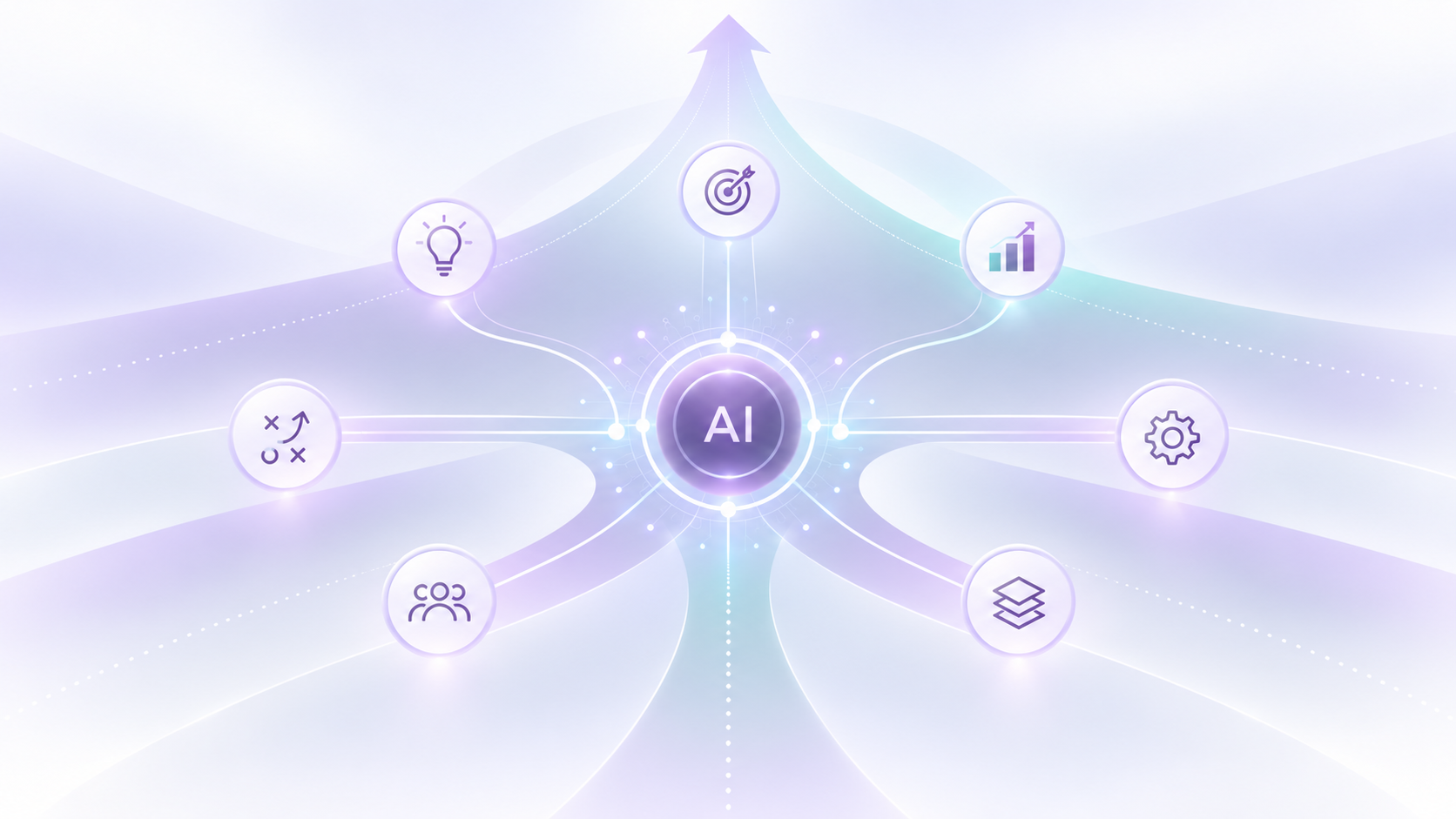
If you are building a strategic plan for the next three to five years and AI is not part of the conversation, your plan is already missing something important. I don’t mean you need an “AI initiative” tucked into the technology section somewhere between upgrading your CRM and replacing old laptops.
I mean AI needs to be part of the actual strategy. AI is starting to change some of the basic assumptions we use when we plan: how much work a team can reasonably accomplish, what skills we need to hire for, which processes still make sense, how quickly we can analyze information, how we communicate with our audiences, what new products or services might be possible, and where humans absolutely need to remain in the driver's seat.
Those are not technology questions, they are strategic ones. And that is why organizations need to be having this conversation now.
Strategic planning is, at its core, an exercise in preparing for the future. You look at where you are, decide where you want to go, assess what it will take to get there, and make choices about people, money, priorities, and time. But those choices depend on assumptions.
How many people will we need? What capabilities do we need to build? What will our audiences expect from us? What will our competitors be able to do? How long will certain work take? What opportunities are realistically within reach? AI is changing those assumptions in real time.
That does not mean every organization needs to race out and automate everything. It does mean that making a three-year plan based entirely on how your organization operates today is increasingly risky. Because while you are planning, the environment around you is moving.
Other organizations are learning how to do more with the same teams. They are finding faster ways to research, analyze, test, communicate, and execute. They are experimenting with new ways to serve customers, donors, members, employees, and communities. Entire workflows are being reconsidered.
Some of those experiments will fail, some will be terrible ideas, and some will fundamentally change what people expect from organizations like yours.
You do not need to chase all of it, but you do need to understand it. That is the difference between reacting to AI and planning for it.
At FLEX, we do not start by asking, “Which AI tools should you buy?”
We start with the strategic plan. Where are you trying to go? What is standing in the way? What requires more capacity than you currently have? What do you believe you will need to hire for? What initiatives have stayed on the wish list because they felt too expensive, too complicated, or too time-consuming?
Then we ask: Does AI change any of those assumptions?
- A growth goal that once appeared to require three additional hires might now require a different combination of people, skills, technology, and redesigned work.
- A project that has lived on the “someday” list because your team lacked capacity may suddenly be worth reconsidering.
- Work that has consumed hundreds of staff hours may be done differently.
- Research that once took days may take hours.
- A small team may be able to test ideas, analyze information, or communicate at a scale that would have been unrealistic only a few years ago.
Those changes matter because strategic plans are ultimately about allocating limited resources. If the resources required to accomplish something change, the strategy should at least acknowledge it.
There is another reason to start now: your team is not waiting for the strategic plan. They are already using AI. Some are experimenting thoughtfully, some are avoiding it entirely, and others may be putting organizational information into tools leadership does not even know they are using.
That creates opportunity, but it also creates risk. If leadership does not decide what role AI should play in the organization, those decisions will still get made. They will just get made one employee, one tool, and one use case at a time.
That is not a strategy, and the longer organizations wait, the harder it becomes to catch up. Not because there is some magic AI tool everyone else knows about, but because advantage comes through learning.
Teams get better at identifying where AI is genuinely useful. They learn what produces bad results, redesign processes, and build better judgment around what should and should not be automated. They develop policies, train employees, and begin understanding where AI creates meaningful value for their particular organization.
An organization that starts thoughtfully experimenting today will understand far more about its own opportunities and risks a year from now than an organization that waits another year to begin.
That is what “being left behind” actually looks like. Not missing the newest feature, but missing the learning curve. And this is where strategy really matters.
Planning for AI does not mean turning your organization over to it. It means making intentional choices about where it can help you accomplish more, where it can make you better, and where you are unwilling to trade human judgment, relationships, trust, or quality for speed.
I have said this before and will probably say it a thousand more times: don't outsource your judgment.
While AI delivers powerful capacity and actionable insights, tool capability alone is not a strategy. True competitive advantage comes from human discernment—anchoring emerging tech in empathy, ethical clarity, and mission-aligned decision-making.
That is where FLEX comes in. AI provides the speed and efficiency, while FLEX brings the strategic judgment, ethical boundaries, and tailored roadmap to ensure these tools directly serve your organization's unique mission and values.
If you are ready to explore how emerging technology affects your strategic trajectory, reach out to FLEX for an AI assessment and roadmap. Together, we can refine your operational assumptions, identify high-impact opportunities, and ensure your strategic plan is positioned for long-term success.

Ready to FLEX?
When you're ready for strategic support that adapts to your unique needs, FLEX Partners is here to help. Connect with us to explore how we can empower your success.